


Photo Walk With The Fujifilm 70-300
Looking for a do‑it‑all telephoto for Fujifilm? See why the 70–300mm is my most‑used travel lens: real‑world reach, surprisingly strong image quality with the 2x teleconverter, and a size you’ll actually want to carry. Perfect for wildlife, landscapes, portraits, and everyday travel photography on X‑T5, X‑H2S, and other Fuji bodies.
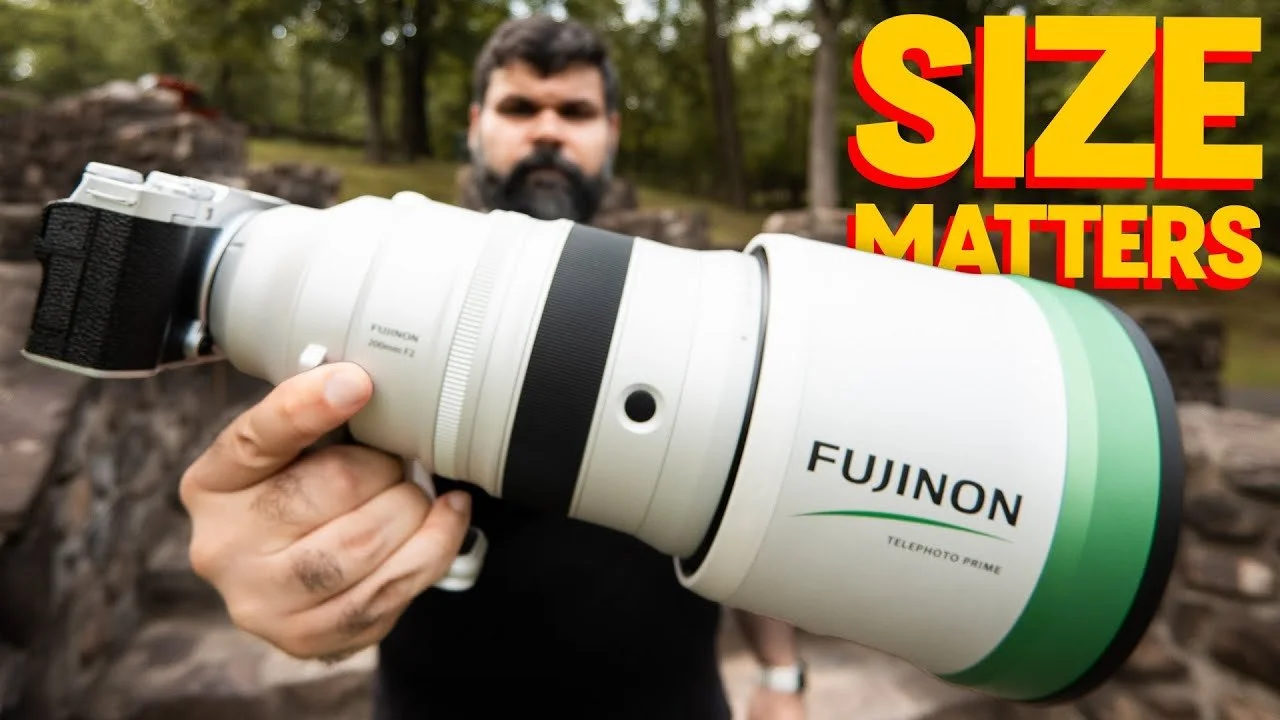
This Setup Makes No Sense, So I Had to Try It: Fujifilm X-M5 + 200mm F2
Fujifilm's smallest camera, the X-M5, on its biggest lens, the 200mm F2. It works way better than it should, and it got me thinking about entry-level cameras and the state of camera YouTube.

The Fujifilm 200mm F2 in 2024
In my latest video, I revisited one of my favorite lenses, the Fujifilm 200mm F2, which I’ve owned for nearly five years. Originally designed for sports photography, this lens offers incredible subject magnification and background compression, making it surprisingly effective for portrait work. I took it out for some portrait sessions, and the results were stunning. The 200mm F2, especially when paired with a 1.4x teleconverter, transforms everyday scenes into dramatic, high-impact images that are usually reserved for professional sports photography.
Despite its weight and size, this lens is a joy to use, delivering crisp, detailed photos even in challenging lighting conditions. If you're interested in seeing how this lens performs outside of its usual sports environment, check out the video for a detailed look at its capabilities in portrait photography. As always, feel free to leave your thoughts and suggestions in the comments.

The Fujifilm 200mm F2's One Flaw: Its $200 Lens Hood
The Fujifilm 200mm F2 is my favorite lens of all time, but its hood has a weak point: a small plastic wedge holding the metal locking bracket. Three years of use, what broke and how Fuji could fix it.